Chat Says 'Dealer's Hot,' Dealer Says Nothing: Inside the Folklore of America's Live Dealer Lobbies

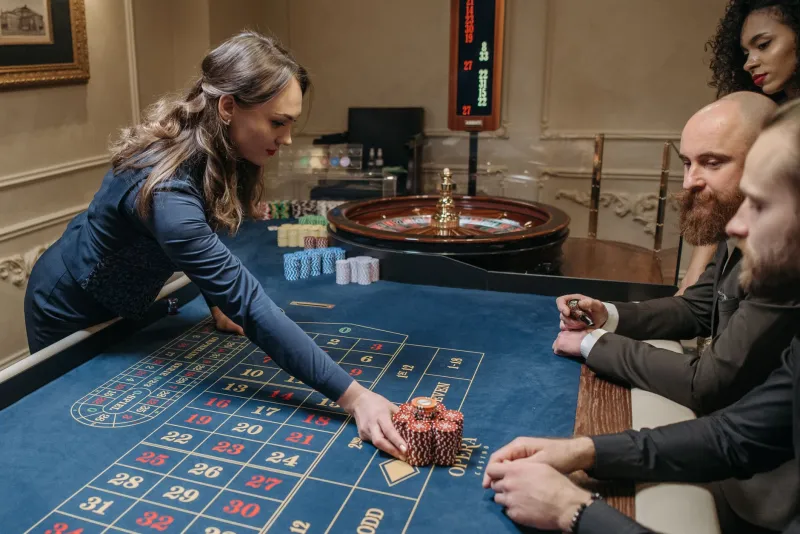
Photo by Photo by Leo_Visions on Unsplash on Unsplash
The 2 A.M. Congregation
Every live dealer lobby has a night shift. Not the dealers — the players. The regulars who log in after the bars close, who know which blackjack table runs fastest, which roulette studio has the chatty croupier, and which baccarat seat is "cursed" according to a legend nobody can source.
We spent weeks hanging out in chats, reading forums like Reddit's r/onlinegambling and dealer-focused communities, and talking to players who've logged thousands of hours in front of a live dealer stream. What we found wasn't strategy. It was folklore — a fully formed folk culture built in the span of a decade, complete with saints, omens, and liturgy.
The Dealer Is Never Random to the Regulars
Ask a roulette regular why they follow a particular dealer and you'll hear things like: "She spins consistent." "He releases late on the third revolution." "You can read her hand."
Mathematically, none of this holds up. Studios rotate dealers on schedule precisely to prevent any pattern from emerging, and wheels are certified and calibrated. But logic has never been the point. What players are really describing is comfort — a familiar rhythm, a face that feels like a neighborhood bartender.
"I know it's random," one blackjack regular told us, a guy who's played the same Evolution table for four years. "But when Marcus is dealing, I play better because I'm relaxed. That's real, even if the cards don't know his name."
That's the core tension of live dealer culture: everyone in the chat half-knows the superstitions are nonsense, and everyone keeps them alive anyway, because the rituals are the social glue.
The Chat Liturgy
Sit in any busy US-facing live table long enough and you'll see the same script play out:
- The greeting wave. New players type "gl everyone" or drop emoji stacks before the shoe starts. Skipping it is considered mildly rude.
- The "dealer's hot" declaration. Any three wins in a row and the chat anoints the table. It spreads faster than any bonus code.
- The scapegoat. Someone joins mid-shoe, the table goes cold, and the regulars grumble about "bringing the bad energy." Nobody means it seriously. Mostly.
- The tip ritual. Regulars often tip the dealer after a big win — a real-money gratuity through the platform's tipping feature — and the chat congratulates it like a group toast.
It's a congregation without a church. The studio is the altar, the shoe is the sacrament, and the chat log is the parish record.
Lucky Tables and Haunted Ones
Every regular we spoke to had a table they considered lucky and one they considered dead. The reasons were always concrete-sounding: "I hit my first royal there." "That's where I got stiffed five blackjacks in a row."
Psychologists call this the illusion of control plus selective memory — you remember the wins tied to a place and forget the losses. But casinos have understood this for a century. The felt on a Vegas craps table isn't just decoration; it's a stage for ritual. Live studios simply digitized it.
The interesting part is how the platforms have quietly leaned in. Some studios let players pick seats, save favorite tables, and follow specific dealers. That's not a math feature. That's a superstition feature, and the operators know it.
What Actually Builds Community (Practical Takeaways)
Strip away the folklore and some tables genuinely are better places to spend your money — just not for supernatural reasons. Here's what our sources said separates a good lobby from a lonely one:
- Active, moderated chat. Tables with real conversation and a present moderator keep the vibe up and the scammers out.
- Native-speaking, US-friendly tables. Studios with America-facing hours and English-first dealers produce far more regulars — familiarity is the whole engine here.
- Slower games for social play. Speed blackjack is great for volume, but the community lives at standard-pace tables where there's time to talk between hands.
- Consistent dealer rotations that aren't too consistent. Enough stability to build familiarity, enough rotation to keep the "hot dealer" mythology alive and harmless.
- Tipping culture. Tables where tipping is normal tend to be friendlier. It's the closest thing live online casinos have to a bartender's rapport.
The Takeaway: Ritual Is the Product
A decade into the live dealer boom, the games themselves are commodities — every major platform offers near-identical blackjack and roulette math. What differentiates a table is the culture around it, and the players have built that culture themselves, one superstition at a time.
So the next time you see a chat full of "gl" greetings and a regular swearing by a dealer named Denise, don't roll your eyes. You're watching modern gambling folklore being written in real time — same as the railbirds at Binion's ever did, just with worse lighting and better odds of a 3 a.m. session.
Play the math. Enjoy the ritual. And if the table feels dead, it's not cursed. It's just not your parish.